

St Peter’s Square in the Vatican was agog mid afternoon on Thursday when the chimney at the Sisten Chapel emitted white smoke signaling the emergence of a new Pope.

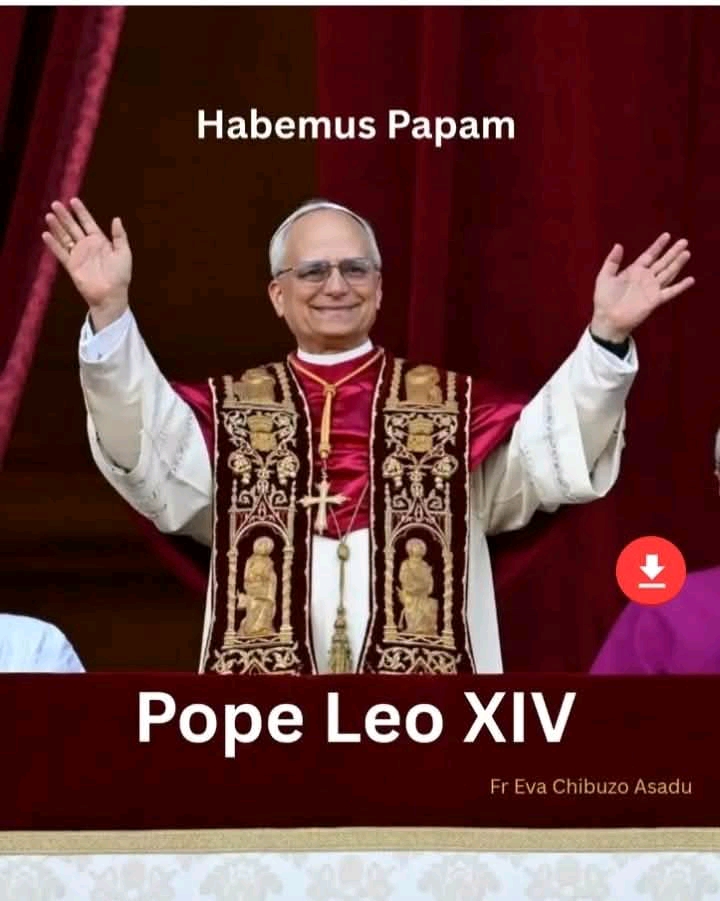
The new Pope was unveiled to a sea of heads when he appeared at the balcony of St Peter’s Square and waved to a jubilant crowd that had gathered immediately after news of the white smoke spread round the globe.
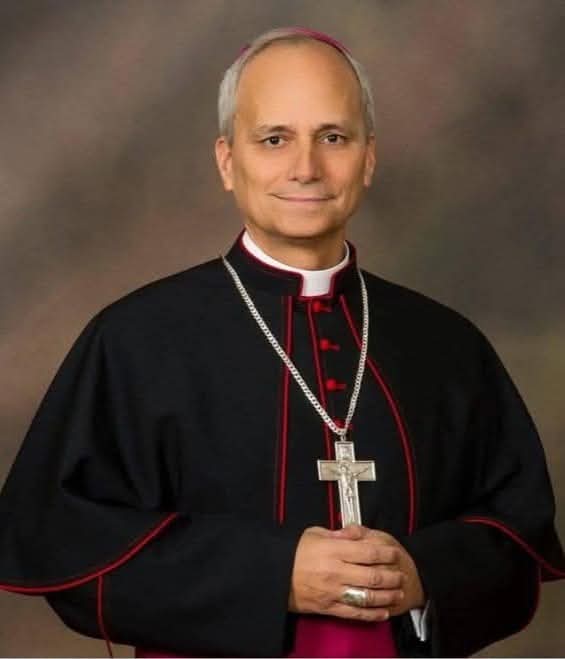
The new Catholic Pontiff is a North American, Cardinal Robert Francis Prevost who has chosen the title of Pope Leo XIV. He is the 267th Pope to ascend St Peter’s throne and would henceforth, in line with Catholic tradition be known and addressed as Pope Leo the XIV.
Cardinal Robert Francis Prevost is a prominent figure in the Catholic Church, known for his roles as Prefect of the Dicastery for Bishops and President of the Pontifical Commission for Latin America. Born on September 14, 1955, in Chicago, Illinois, USA. Prevost is a member of the Order of Saint Augustine (OSA) and has had a distinguished career in the Church.
EARLY LIFE AND EDUCATION
Born in Chicago to a family of Italian, French, and Spanish origins. He joined the Augustinian Minor Seminary in high school. Earned a Bachelor of Science degree in Mathematics from Villanova University in 1977; a Master of Divinity from Catholic Theological Union in Chicago and a Doctorate in Canon Law from the Pontifical University of Saint Thomas Aquinas in Rome.
CAREER HIGHLIGHTS
1. Served as a Missionary in Peru from 1985 to 1999, holding various roles including Chancellor, Parish Priest and Seminary teacher.
2. Elected Prior General of the worldwide. Augustinian order, serving two terms from 2001 to 2013.
3. Appointed Apostolic Administrator of the Diocese of Chiclayo in Peru in 2014, later becoming the Diocesan Bishop.
4. Prefect of the Dicastery for Bishops since January 2023
5. Elevated to Cardinal – Bishop of Albano in September 2023 by Pope Francis.
6. Elected Pope on 8/05/2025
7. He chose the name: Pope Leo XIV.
VIEWS AND CONTROVERSIES
Supports synodality and Pope Francis’ vision for a more inclusive and participatory Church.
Expresses reservations about Western culture’s influence on the Church, particularly regarding LGBTQ+ issues.