
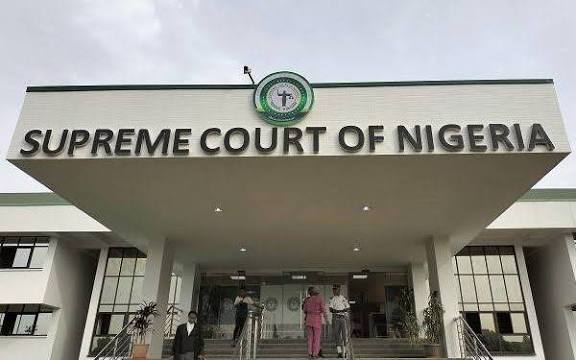
Nigeria’s Supreme Court has affirmed the religious rights of students to worship in campuses of institutions in the country.
The apex Court last Monday February 10, 2026, unanimously dismissed an appeal by authorities of the Rivers State University (RSU) over the rights of Muslim students to observe prayers and establish a place of worship on the university’s Nkpolu Oroworukwo campus.
The Court of finality in Nigeria unanimously upheld rulings of the lower courts that the students are entitled to worship freely and to be allocated a designated space within the campus for their religious worships.

The court’s ruling has brought to a close a dispute that began nearly 14 years ago at the Federal High Court in Port Harcourt, capital of Rivers state.
The case started in 2012, when Muslim students alleged that the university authorities had restricted their ability to conduct prayers and erect structures associated with Islamic worship.
In Suit No. FHC/PH/CS/150/2012, filed at the Federal High Court in Port Harcourt, the claimants, led by Umaru Wazuru and 98 others, challenged the actions of the university authorities, making Attorney General of the State as a respondent.
Represented by solicitors from the law firm of Oloriegbe & Co., the students sought declaratory reliefs, arguing that the restrictions were unconstitutional and discriminatory. They also requested that the university allocate a parcel of land for Muslim students to worship, similar to facilities available to Christian groups on campus.
In a judgment delivered on 19 February 2013, the Federal High Court ruled in favour of the students, holding that prohibiting Muslim students from establishing a place of worship, while churches existed on campus violated the constitutional guarantees of freedom of thought, conscience, and religion.

The court also rejected the university’s argument that a mosque was not included in the institution’s original masterplan, describing the reasoning as inconsistent with constitutional protections.
The university appealed the ruling to the Court of Appeal, Port Harcourt Division, in Appeal No. CA/PH/614/2015. On 31 March 2017, the appellate court unanimously dismissed the appeal for lacking merit and affirmed the decision of the Federal High Court.
A further appeal was subsequently filed at the Supreme Court in suit No. SC/055/2018 and the matter came up for hearing on Monday February 10, 2026, when the apex court unanimously dismissed the appeal, effectively ending the litigation.

Advertorial
