






It has been revealed that Nigerians consume 6.84 million litres of sachet water daily, amounting to 2.5 billion litres in the year 2025.
The revelation was made by the Director-General of the National Environmental Standards and Regulations Enforcement Agency (NESREA), Prof. Innocent Barikor on Tuesday January 27, 2025 in Abuja at the inception meeting of the Global Environment Facility (GEF) Child Project 11193, titled “Circular Solutions to Plastic Pollution in Nigeria”.

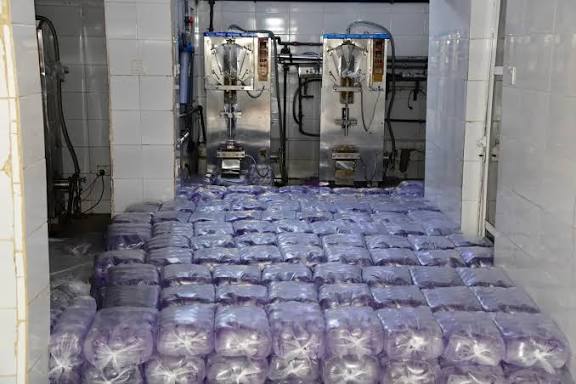
Bags of Pure water
Prof Barikor who said that this staggering volume of sachet water, also known as pure water was produced by over 32,000 manufacturers nationwide also added that the trend has worsened plastic pollution across the country.
NESREA DG further stated, during the inception meeting that the project is designed to reduce the consumption of plastic sachet water while ensuring that Nigerians continue to have access to safe and affordable drinking water.
He described the meeting as a major step in Nigeria’s efforts to tackle the environmental and public health challenges posed by plastic pollution.
“As you are aware, Nigeria consumes over 2.5 billion litres of sachet water annually, produced by more than 32,000 manufacturers across the country. While this has helped bridge gaps in access to drinking water, it has also resulted in severe environmental consequences.”
United Nations Environment Programme (UNEP) representative, Isabella Vanderbeck in her goodwill message described Nigeria as a key partner in global efforts to reduce plastic pollution. “Life without plastic is truly fantastic, let us hit the ground, let us do away with plastic,” she said.

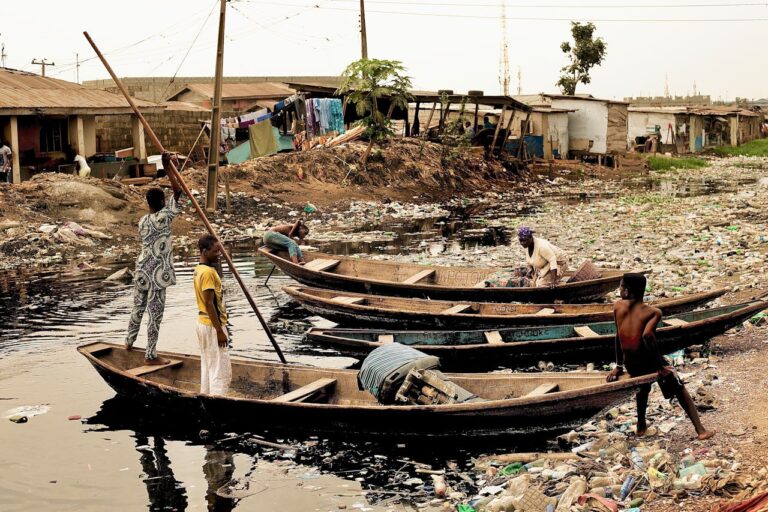
Pollution from sachet water
Also speaking, Evelyn Swain of the Global Environment Facility (GEF) reaffirmed the organisation’s commitment to supporting Nigeria in reducing the use of single-use plastic water sachets while ensuring access to safe drinking water.
“GEF is proud to support Nigeria in its journey to reduce the consumption of single-use plastic water sachets in Nigeria, while ensuring accessible and safe drinking water,” Swain, a Senior Environmental Specialist and Plastic Reboot Coordinator at the GEF Secretariat, who was represented by Anna Blanpain stated.
Mrs Zuliat Mohammed, Chief Scientific Officer at the Federal Ministry of Water Resources and Sanitation, said the ministry was ready to collaborate with NESREA to ensure the success of the project. She said the programme would help Nigeria reduce and eventually eliminate plastic sachet waste in the country.
While sachet water has become a convenient solution for many Nigerians, it comes with significant health and environmental risks. The widespread use of sachet water raises questions about how safe it really is and what impact it has on our surroundings.
Many Nigerians believe pure water is safe to drink, but several studies have shown that this is not always the case. The quality of pure water produced in the country varies widely, depending on where and how it is produced.
While some producers adhere to strict hygienic and safety standards, others cut corners, leading to water that contains harmful bacteria and other contaminants.
Aside from the health risks, pure water also contributes to Nigeria’s growing plastic waste problem. The millions of sachets consumed daily across the country generate an enormous amount of single-use plastic waste. Most of these sachets are not properly disposed of, ending up in streets, waterways, and drainage systems.


Advertorial
This plastic waste clogs drainage systems, leading to flooding in many cities during the rainy season. It also poses a threat to wildlife and the environment, as the plastic takes hundreds of years to break down. Despite efforts by some organizations to promote recycling, the infrastructure to properly manage this waste is still lacking in many parts of the country.
The plastic waste from sachet water is more than just an eyesore; it represents a long-term environmental hazard that Nigeria must address. While the affordability and convenience of sachet water are clear, the environmental cost is very high.


