

Port Harcourt, capital of Rivers State, once proudly known as the “Garden City” of Nigeria because of its cleanliness and greenery is fast becoming the ‘Garbage City’ of the country.
This is because the hydrocarbons headquarters of West Africa is currently facing a disturbing waste-management challenges as heaps of refuse and garbage have taken over major roads, markets, streets and residential areas across the state capital and environs.
Our investigations revealed that in parts of Port Harcourt, particularly Ogbogoro Road, Slaughter Market and the NTA–Choba axis, residents and traders say uncollected refuse have become a recurring problem, raising concerns about public health, environmental degradation, flooding and the overall effectiveness of waste management in the state.
The situation has also attracted public criticisms because waste management falls within the responsibilities of the Rivers State Waste Management Agency (RIWAMA), which is expected to coordinate and oversee the evacuation and proper disposal of wastes across the state.
Growing complaints over garbage accumulation
Recent reports have documented waste accumulation in several parts of Port Harcourt. In April 2026, residents complained about piles of uncollected refuse in areas around Ada George, Obiri-Ikwerre and NTA-Ngboba Road. Others include Rumuosi, Alakahia and Choba, all in Obio/Akpor LGA of the state.
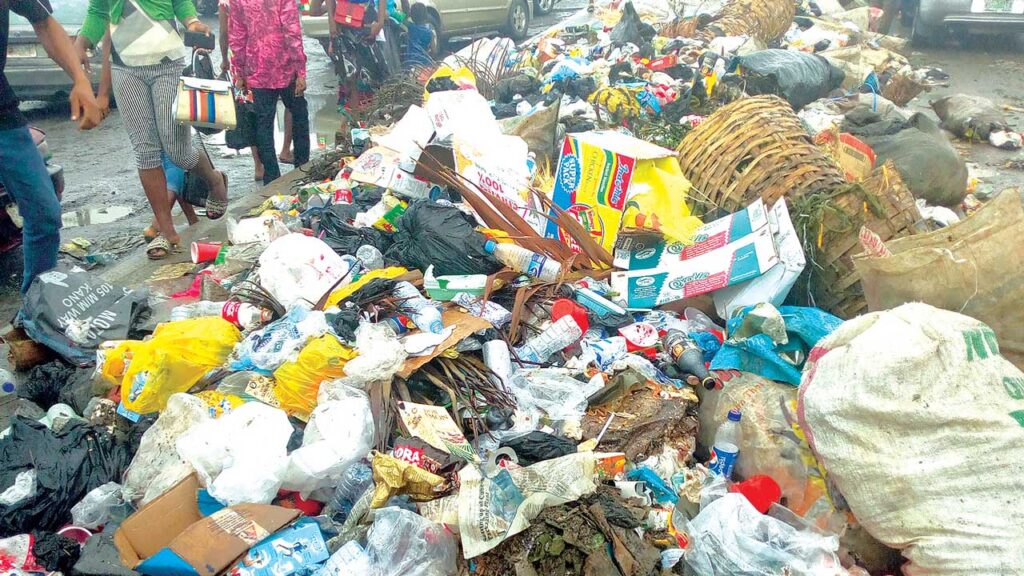
Residents and business owners in some of the affected communities who spoke to our Correspondent said the situation had become a nuisance, with offensive odours and indiscriminate dumpings affecting their daily activities and commercial operations.
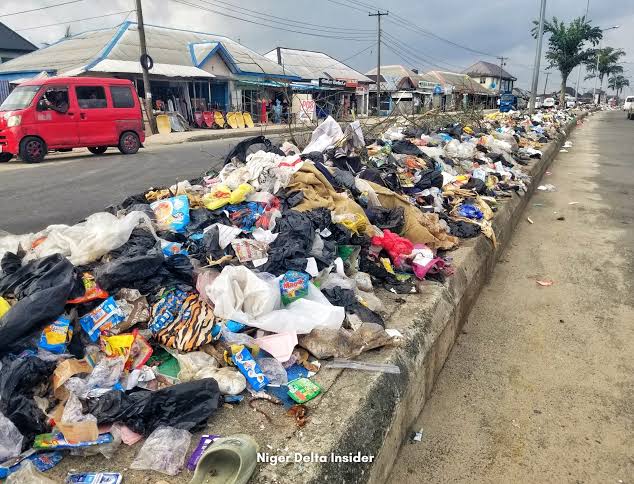
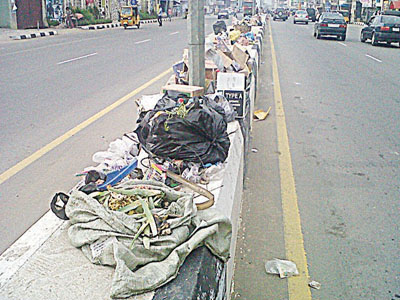
The Port Harcourt City Council had also raised concerns in April over waste-management lapses, specifically citing wastes reportedly dumped on the medians of major roads, like Ikwerre Road, Olu Obasanjo Road and others.
Some of the residents who spoke anonymously expressed frustration and disappointment, even as they called for improved evacuation by RIWAMA and its service providers.
While some questioned what they described as the apparent inability of the authorities to maintain regular refuse disposal, despite the huge resources available to government, Sani Jamiu questioned the effectiveness of relevant agencies, asking what happens to the allocations and resources allocated to them when basic environmental services remain inadequate?
He also questioned the flimsy explanations sometimes offered for such poor service delivery, particularly when political or administrative circumstances are cited as reasons for government agencies’ inability to function effectively.
Another resident, who identified himself simply as Gift, summed up his frustration bluntly: “Governance is on vacation in Rivers State.”
But for residents of the affected communities, however, the issue goes beyond aesthetics. They argue that the indiscriminate accumulation of garbage creates an unhealthy environment, obstructs drainage channels and increases the vulnerability of communities to flash floodings, particularly during periods of heavy rainfall.
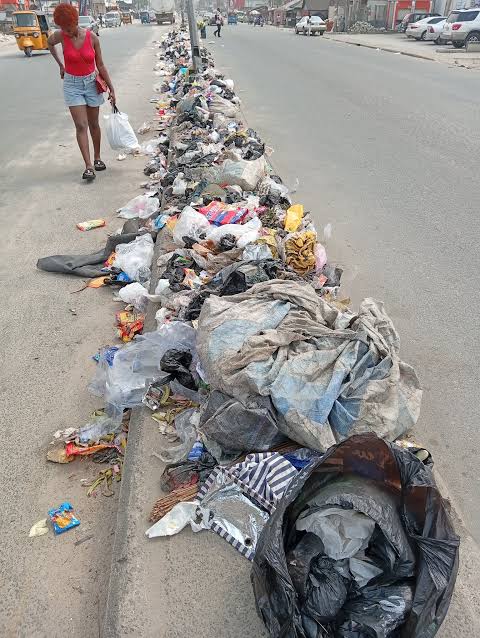
Speaking on the issue, Health Practitioners, Mr. Festus Christopher and Ayomide Umar expressed concerns about the potential consequences of allowing wastes to litter around roads, markets and residential areas for long periods.
They also noted that decomposing wastes can produce offensive odours that attract flies, rodents and other disease vectors harmful to human health, adding that stagnant water from blocked drainage channels may also provide breeding grounds for mosquitoes.
Poor sanitation and contaminated surroundings can further increase the risk of diarrhoeal diseases and other sanitation-related illnesses, particularly where waste comes into contact with food and water in densely populated neighborhoods.
During the 2026 World Environment Day activities, the state government acknowledged that indiscriminate waste disposal, including the dumping of domestic waste in gutters and drainage channels, contributes to blocked waterways, flooding and erosion. This makes the situation particularly worrisome for communities already vulnerable to floodings.
The problem is not limited to residential areas alone
Markets, naturally generate substantial quantities of wastes every day and without prompt evacuation, food wastes, plastic materials and other refuse can quickly pile up, creating unpleasant and potentially unhygienic conditions for traders and customers.
The situation can also become self-perpetuating. Once a location becomes known as an unofficial dump site, more people may begin depositing garbage there, further worsening the problem and making subsequent evacuations more difficult.
However, the Rivers State Government and its agency, RIWAMA have previously acknowledged the seriousness of waste management in the metropolis.
Six months back, this year, RIWAMA, working with the Obio/Akpor and Port Harcourt City local governments, announced a ban on dumping refuse on road dividers and instructed residents to use approved waste receptacles. The agency also prohibited the use of unapproved cart pushers for waste collection and disposal. RIWAMA has further stated that it works with more than 100 contractors as part of its waste-management structure.
These measures, analysts argued, suggest that the government and the relevant agencies are aware of the challenges confronting wastes management in the state.
However, the continued complaints from residents raise questions about whether the existing system is functioning effectively enough to meet the needs of the rapidly growing population of Port Harcourt and its surrounding communities?
RIWAMA Chairman, Chief (Dr) Samuel Nwanosike has previously announced measures aimed at improving sanitation and waste management in the state. For instance, a year ago in August 2025, he announced a ban on indiscriminate dumping of refuse on road medians in Port Harcourt and its environs.
More recently, RIWAMA itself announced initiatives aimed at addressing the challenge. Last July, the agency said the state government had secured two additional dump sites at the Igwuruta and Elelenwo/Iriebe axis to improve waste evacuation and disposal.
Yet, despite these measures and interventions, residents continue to complain about refuse accumulation in parts of the metropolis.
Against this backdrop, we sought the response of Chief (Dr) Samuel Nwanosike, RIWAMA chairman regarding the complaints and the specific conditions observed around the city
But as at the time of filing this report, we’re still awaiting his response to our request formally forwarded to him in his official capacity as Chairman of RIWAMA.
However, residents have a legitimate right to ask why garbage continues to accumulate in locations where wastes evacuation is expected to be a routine public service.
For many residents, the refuse crisis has become a symbol of a broader question about governance: what tangible services are citizens receiving in return for the public resources available to government? These criticisms are particularly pointed because environmental sanitation is among the most visible responsibilities of government.
Citizens do not necessarily need complicated statistics to determine whether environmental services are working. They reflect on their streets. If refuse are removed regularly, residents see the difference. If drainage channels are cleared, communities experience the benefits. And If roadsides remain covered in waste for days or weeks, the failure is equally visible.
That is why the complaints from Ogbogoro, Slaughter Market, NTA–Choba and other affected areas deserve urgent attention. The issue should not be reduced to political confrontation.
Whether the problem is caused by contractors, inadequate evacuation capacity, illegal dumping, funding constraints, poor coordination or a combination of several factors, the government and RIWAMA owe residents a clear explanation and, more importantly, an effective solution.
Advertorial
RIWAMA has recently stated that it is strengthening waste collection and disposal systems across Port Harcourt, Obio/Akpor and surrounding areas. The challenge, therefore, is to translate those plans and announcements into visible results on the streets.
Port Harcourt cannot afford to allow garbage to become a permanent feature of its major roads, markets and residential communities. The city needs regular waste evacuation, properly managed dumpsites, functional drainage systems, effective enforcements against indiscriminate dumpings and sustained public education on responsible waste disposal.
For a city that once proudly celebrated its identity as the Garden City, allowing mountains of refuse to dominate its roads and markets is more than an environmental embarrassment. It is a public-health concern, a flood-risk issue and, ultimately, a test of governance.
And residents are asking a simple question: When will governance return from holiday?
By Ibrahim Bakare
